
fusion in Physics
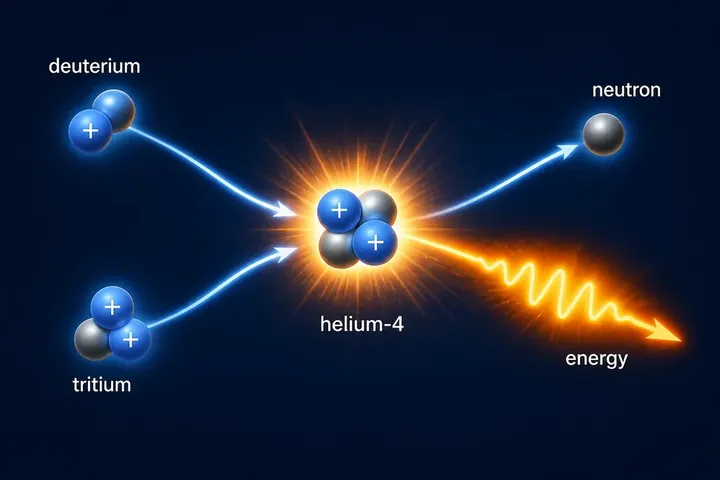
A nuclear reaction in which light nuclei join to form a heavier nucleus, releasing energy.
Fusion needs extremely high temperatures so nuclei can overcome their electric repulsion. The heavier product has a smaller total mass, and the lost mass appears as energy.
Meaning in your language
नाभिकीय संलयन — हल्के नाभिकों का मिलकर भारी नाभिक बनाना, ऊर्जा मुक्त होती है
संलयन के लिए अत्यधिक उच्च ताप चाहिए, ताकि नाभिक अपने वैद्युत प्रतिकर्षण पर विजय पा सकें। भारी उत्पाद का कुल द्रव्यमान कम होता है, और लुप्त द्रव्यमान ऊर्जा के रूप में प्रकट होता है।
اندماج نووي: اتحاد أنوية خفيفة لتكوين نواة أثقل مع تحرير طاقة
يحتاج الاندماج إلى درجات حرارة عالية جدًا كي تتغلب الأنوية على تنافرها الكهربائي. والناتج الأثقل تكون كتلته الكلية أصغر، وتظهر الكتلة المفقودة في صورة طاقة.
fusion nucléaire : union de noyaux légers en un noyau plus lourd avec libération d'énergie
La fusion exige des températures extrêmement élevées pour que les noyaux surmontent leur répulsion électrique. Le produit plus lourd a une masse totale plus faible, et la masse perdue apparaît sous forme d'énergie.
fusi nuklir: penggabungan inti ringan menjadi inti lebih berat disertai pelepasan energi
Fusi memerlukan suhu yang sangat tinggi agar inti-inti dapat mengatasi tolakan listriknya. Produk yang lebih berat memiliki massa total lebih kecil, dan massa yang hilang muncul sebagai energi.
核聚变:轻核结合成较重的核并释放能量
核聚变需要极高的温度,使原子核能克服彼此间的电斥力。生成的较重原子核总质量更小,亏损的质量以能量形式释放。
Examples
- Nuclear fusion of hydrogen into helium is the source of energy in the Sun and other stars.
- Scientists at the ITER project are trying to make fusion a clean source of electricity on Earth.
Everyday meaning
the joining of two or more different things to make one new thing